

🛒 Shopping for Electronic Parts 🛒
In SOIC and SOT: The Microchips, we see how microchips arrive in a warehouse and are placed on their circuit boards, but how did they get there in the first place?
People who plan the purchase orders for the right chips for circuit boards work in what we call "Distribution and Procurement." These professionals have to take the specifications and parts lists from design engineers and actually find the parts in enough quantities at the best price to fill the footprints and arrive just in time for all the cell phones or cars or airplanes a company needs to build this week and next month and so on.
“The electronic components market size reached USD 701 billion in 2025 and is forecast to rise to USD 1 trillion by 2030...”
The Scale of the Electronics Distribution & Procurement World
The world of electronic component distribution and procurement is enormous! Thousands of people work in this industry every day, handling detailed ordering, negotiating prices, planning inventory, managing warehouses, arranging shipping, and making sure the right parts arrive on time. Big distributors like Mouser and DigiKey each employ thousands of workers worldwide (Mouser alone has over 4,000 employees). Across the United States, the electronic parts wholesaling and distribution industry supports tens of thousands of jobs. Worldwide, distributors ship hundreds of millions to billions of individual components every single day. In a full year, the total value of electronic components moving through global supply chains reaches hundreds of billions of dollars. This massive behind-the-scenes network keeps factories, schools, inventors, and repair shops running smoothly all around the world.
Lesson 1: What Are Electronic Component Distributors?
What is a Distributor?
A distributor is a big company that buys electronic parts directly from the factories and sells them to schools, engineers, and hobbyists.
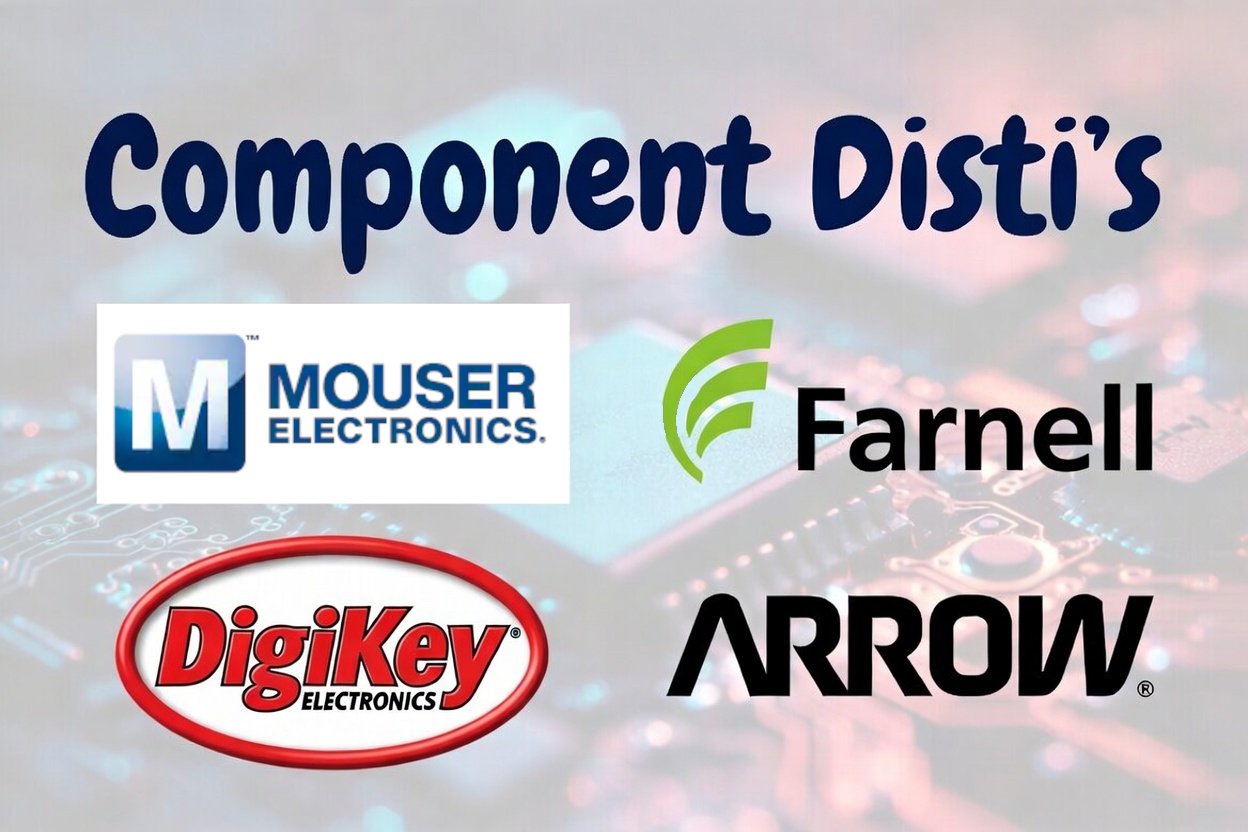
The biggest trusted ones are:
- Mouser Electronics
- DigiKey
- Farnell
- Arrow Electronics
Why not just use Amazon?
Amazon can be cheaper, but it has thousands of different sellers. Some might send counterfeit (fake) parts that don’t work. Mouser, DigiKey, and the others only sell real, authentic parts directly from the manufacturers.
Amazon can be cheaper, but it has thousands of different sellers. Some might send counterfeit (fake) parts that don’t work. Mouser, DigiKey, and the others only sell real, authentic parts directly from the manufacturers.
Lesson 2A: How to Shop on Mouser (Manual Search)
Step 1: Create a Free Account
- Go to www.mouser.com
- Top right → Sign In → Create Account
- Fill in your name, email, password, school name (“Student”), and address
- Check your email and click the confirmation link
Step 2: Understand Your BOM (Bill of Materials)
Your BOM is your shopping list. Important columns:
- REFDES (Reference Designator) – Where the part goes on the board (U1, R2, etc.)
- Qty – Quantity: How many you need
- Package / Footprint – Shape (DIP, SOIC-8, etc.) – MUST match!
- Part Number – The exact code to search
- 2nd Source – Backup part
Step 3–5: Search and Add Parts
- Type the exact part number in the big search box
- Match the Package exactly
- Sort by Price (cheapest first) and check Stock
- Type quantity → click Add to Cart
- Repeat for every part
You can also try their "BoM Import Tools" but you must be careful to check it for GIGO mistakes. (Garbage In, Garbage Out!) It will try to match numbers, but humans who know what and why they want a certain part are much more likely to get it right.
Lesson 2B: How to Shop on DigiKey
Almost exactly the same as Mouser!
- Go to www.digikey.com and create an account
- Search the exact part number
- Match package, check price & stock
- Add to cart
Lesson 3: Compare Prices on Mouser vs DigiKey
Search your whole BOM on both websites and compare.
| Part Number | Mouser Price + Stock | DigiKey Price + Stock | Cheaper Site | Notes |
|---|---|---|---|---|
| LM358DR | $0.38 (1800 in stock) | $0.45 (2500 in stock) | Mouser | TR version |
Important Note About Pricing & Tariffs
Prices can be different because of stock, packaging, and tariffs. Tariffs are extra taxes the government adds on parts coming from certain countries. That’s why you should always compare several sites!
Prices can be different because of stock, packaging, and tariffs. Tariffs are extra taxes the government adds on parts coming from certain countries. That’s why you should always compare several sites!
Final Tips
- Always match the exact Package/Footprint
- Double-check part numbers
- Ask a teacher or parent before paying
- Save your carts so you can come back later
You are now shopping like a real procurement engineer!
Large companies called OEMs (Original Equipment Manufacturers) — like Apple, Samsung, and Dell (computers and phones), Ford, Toyota, and Tesla (automotive), Boeing and Airbus (aerospace), and Whirlpool and GE (home appliances) — often have their own special procurement departments. These departments buy electronic parts directly from the manufacturers (such as Microchip, Texas Instruments, or Intel) in huge quantities — sometimes millions of pieces at a time. Because they buy so much, they get the best (lowest) prices. Some OEMs don’t even do the buying themselves — they hire ODMs (Original Design Manufacturers) or CMs (Contract Manufacturers) to design and build the products for them, including purchasing all the parts.Distributors (often called “distis”) make their money by buying large reels and boxes of parts from the manufacturers, keeping them in stock, and then selling smaller quantities to thousands of smaller companies, schools, makers, and hobbyists. They charge a little more than the giant OEMs pay, but they make it fast and easy for everyone else to get the exact parts they need, and with fast shipping.

MSOP says thanks!
SOIC & SOT – The Microchips
Two microchips named SOIC & SOT go on a journey through an electronics assembly line. From shipping boxes, through the soldering process, assembly and test, the chips learn about the world outside, and what they were born to do!
SOIC y SOT: Los Microchips
Hay un mundo electrónico de maravillas bajo el plástico y el cristal de nuestras computadoras portátiles y teléfonos inteligentes.¡Únete a dos adorables microchips en su valiente aventura a través de ese mundo y descubre para qué nacieron!